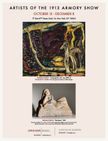
Now open at The Met in New York City is Art for the Millions: American Culture and Politics in the 1930s, an exhibition that focuses on a vibrant period of art and culture. Featuring more than 100 works, the exhibition focuses on how artists expressed political messages and ideologies through a range of media.
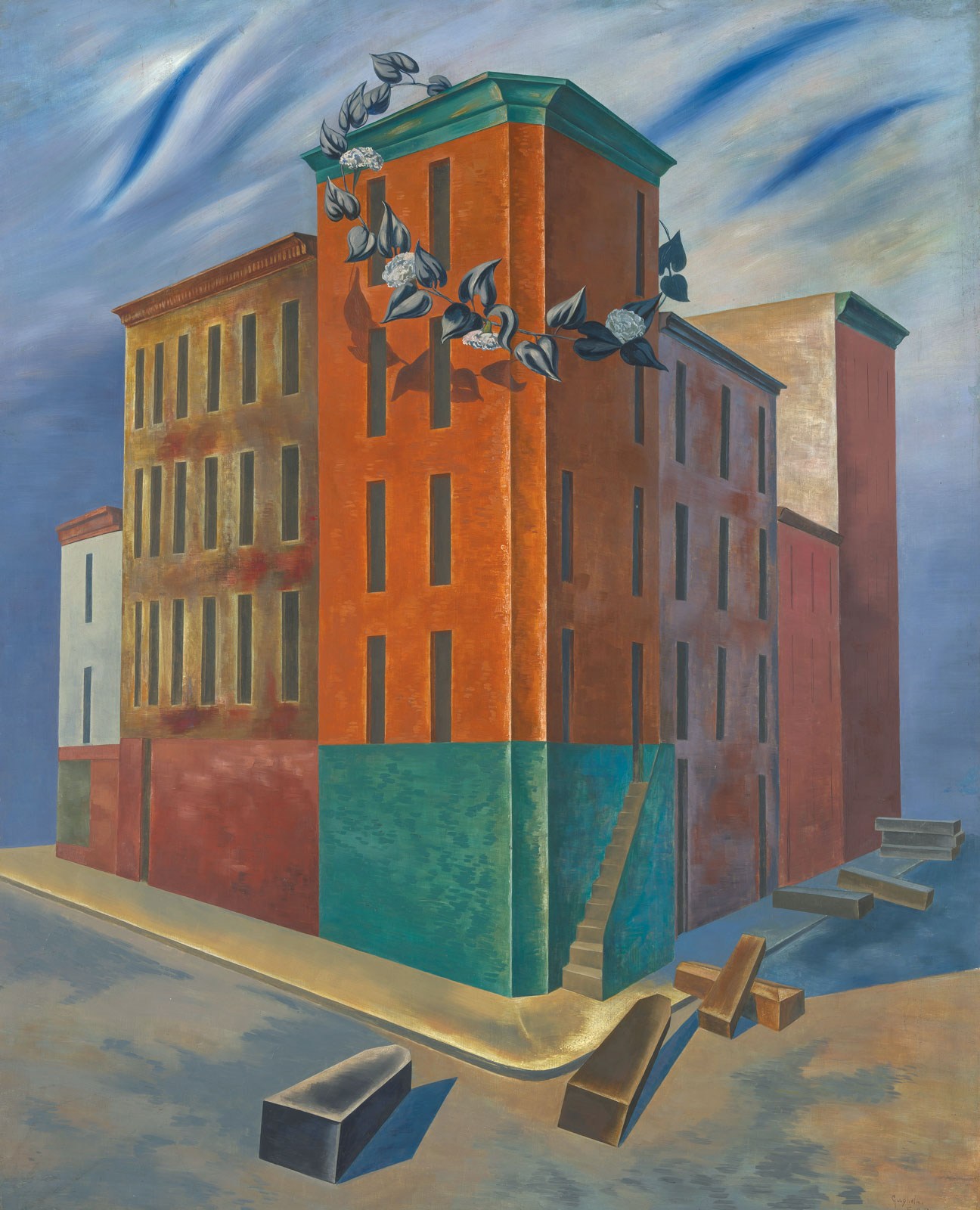 O. Louis Guglielmi (1906-1956), “One Third of a Nation,” 1939. Oil and tempera on wood, 30 x 24 in. The Metropolitan Museum of Art, New York. Gift of New York City W. P. A., 1943 (43.47.10).
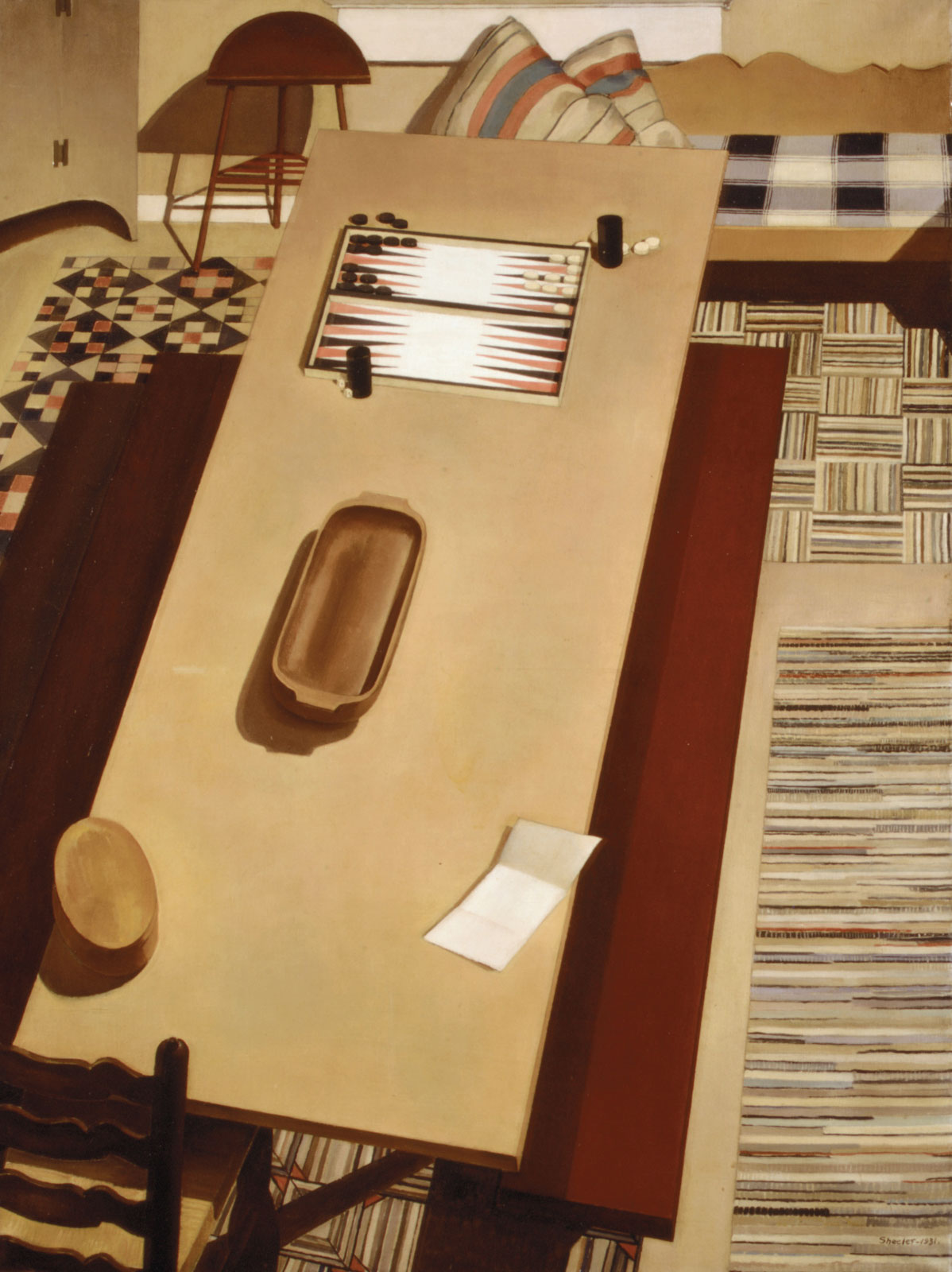 Charles Sheeler (1883-1965), Americana, 1931. Oil on canvas, 48 x 36 in. The Metropolitan Museum of Art, New York, Edith and Milton Lowenthal Collection, Bequest of Edith Abrahamson. Lowenthal, 1991 (1992.24.8).
“American artists witnessed astounding hardships in the 1930s and responded fervently,” says Max Hollein, The Met’s Marina Kellen French Director and CEO. “As the nation confronts similar issues of political polarization and widening inequality today, this insightful exhibition serves as a poignant reminder of how artists then, like now, used their craft to connect with audiences, take action, and illuminate social ills. This presentation also brings to the fore women artists and artists of color who were often shut out of the mainstream art world.”
Allison Rudnick, associate curator of drawings and prints, adds: “While visual culture in the United States has always been suffused with ideology, cultural production in the 1930s is notable for representing an exceptional range of social and political messages. Every visual medium—from prints to film to fashion—played a role in transmitting these messages to millions of Americans. The works provide a unique framework for understanding a fraught and fascinating decade, one that mirrors today’s world in many ways.”
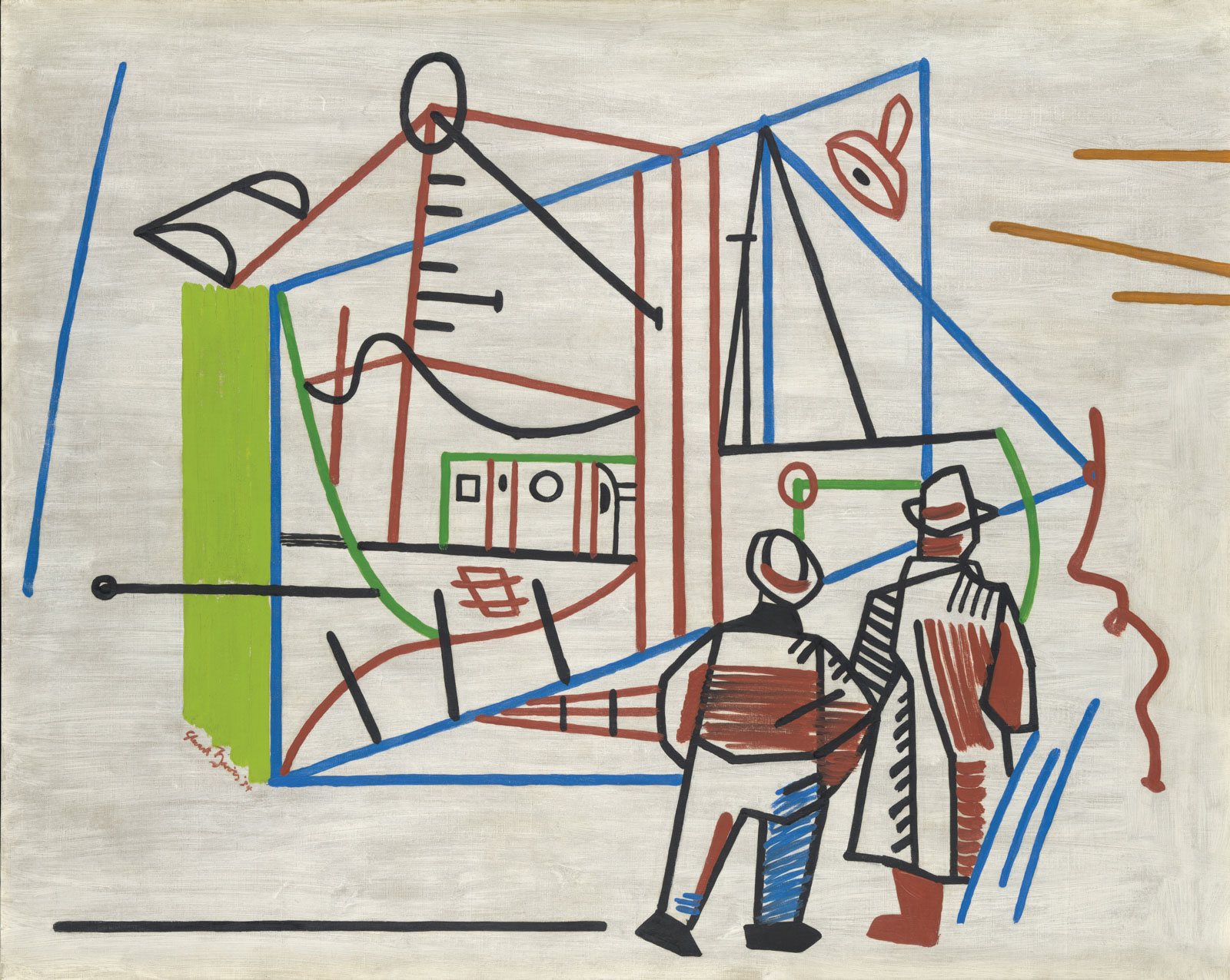 Stuart Davis (1892-1964), Men and Machine, 1934. Oil on canvas, 32 x 40 in. The Metropolitan Museum of Art, New York, Gift of Mr. and Mrs. Jay R. Braus, 1981 (1981.406) © 2023 Estate of Stuart Davis / Licensed by VAGA at Artists Rights Society (ARS), NY.
The exhibition is organized thematically across three galleries within the Met’s famous Fifth Avenue location. The themed sections are “Leftist Politics and Labor,” “Cultural Nationalism” and “The Promise of Progress.”
Labor and industrialization play a large role in the exhibition, with a still frame from Charlie Chaplin’s Modern Times—the Little Tramp gleefully tightening bolts atop a monstrous cog in a complicated machine—serving as an introductory image to the exhibition’s catalog.
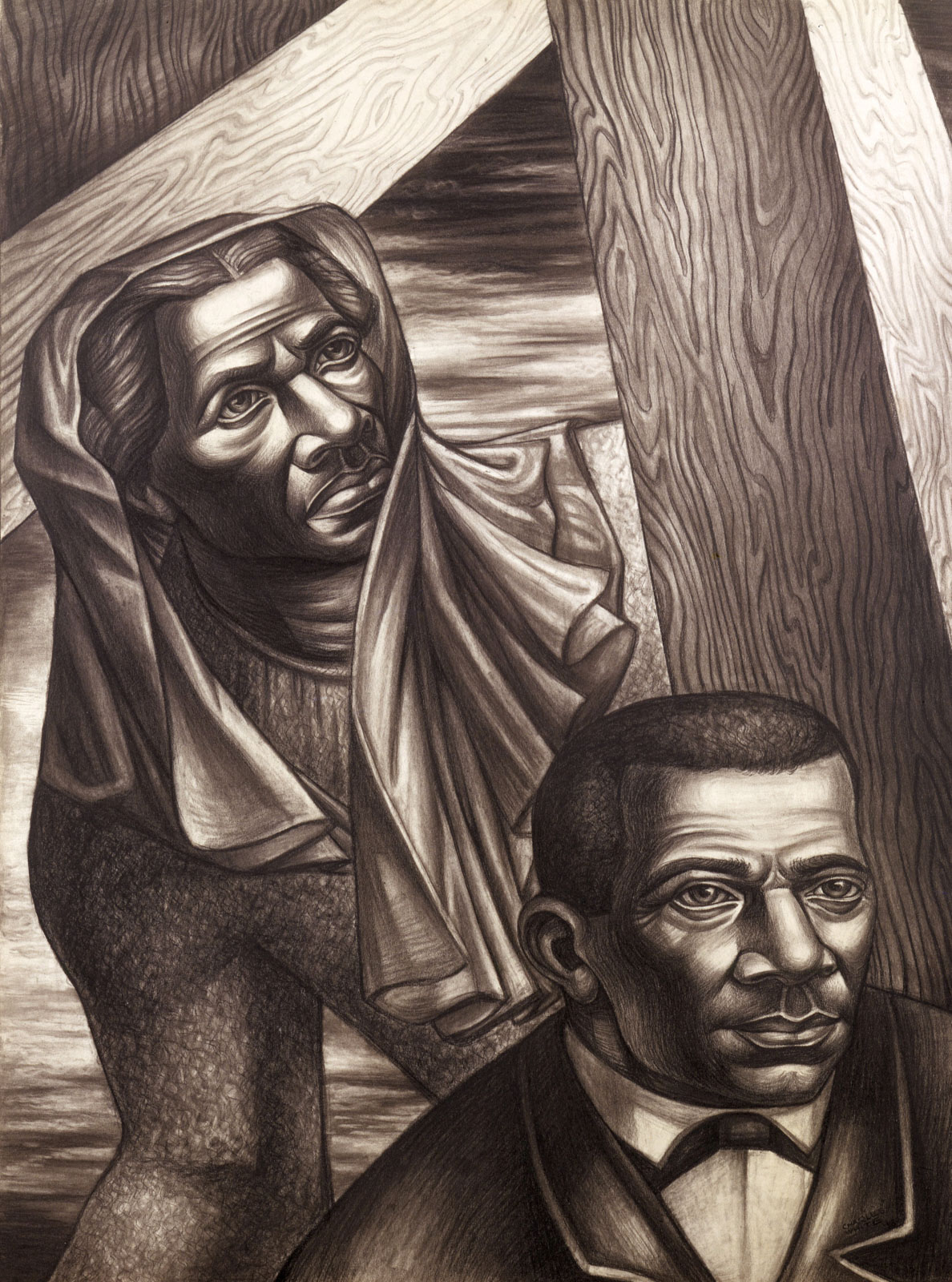 Charles White (1918-1979), Sojourner Truth and Booker T. Washington, 1943. Graphite on paperboard, 375⁄8 x 28 in. The Newark Museum of Art, N.J., Purchase, 1944, Sophronia Anderson Bequest Fund.
“Some artists—particularly a loose group known as the Precisionists working primarily before the stock market crash—treated industrial machinery and the plants that housed them as objects of fascination and wonder. After the onset of the economic downturn, however, wage workers were placed front and center. Images that pitted industrial machines against people invoked Karl Marx’s theory of exploitation under capitalism, as in communist artist Hugo Gellert’s illustrations for a condensed 1934 edition of the 19th-century German philosopher’s book Das Kapital. In one, a woman and a young boy are bound at the wrists to oversize cogs in a scene that conjures the Crucifixion, with the vulnerable sacrificed in the name of capitalism,” writes Rudnick in the catalog. “In another, a muscular fist breaks through a mass of mechanical parts, conquering the machine-enemy. Charlie Chaplin famously took on the inhumane working conditions of modern industrialism in his satirical film Modern Times. The struggle between wage worker and machine is captured in a scene in which Chaplin’s Tramp character finds a job at a factory but can’t stay apace with the work. In an attempt to keep up, he dives onto the assembly line conveyer belt and is ultimately swept up into the machine’s enormous cogs.”
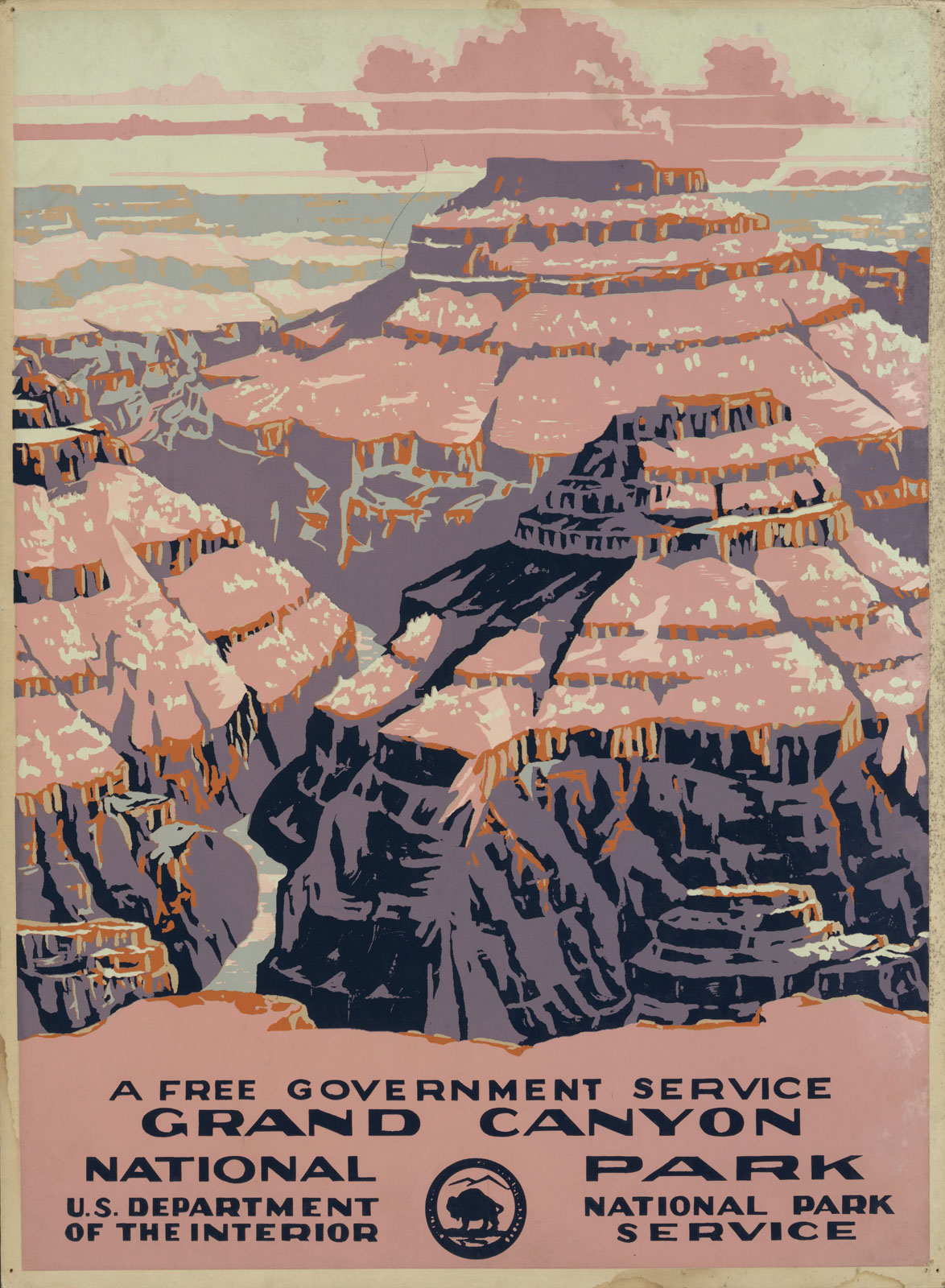 C. Don Powell (1896-1964), Grand Canyon National Park, A Free Government Service poster, ca. 1938. Lithograph, 187⁄8 x 143⁄16 in. Library of Congress, Prints and Photographs Division, Washington, D.C.
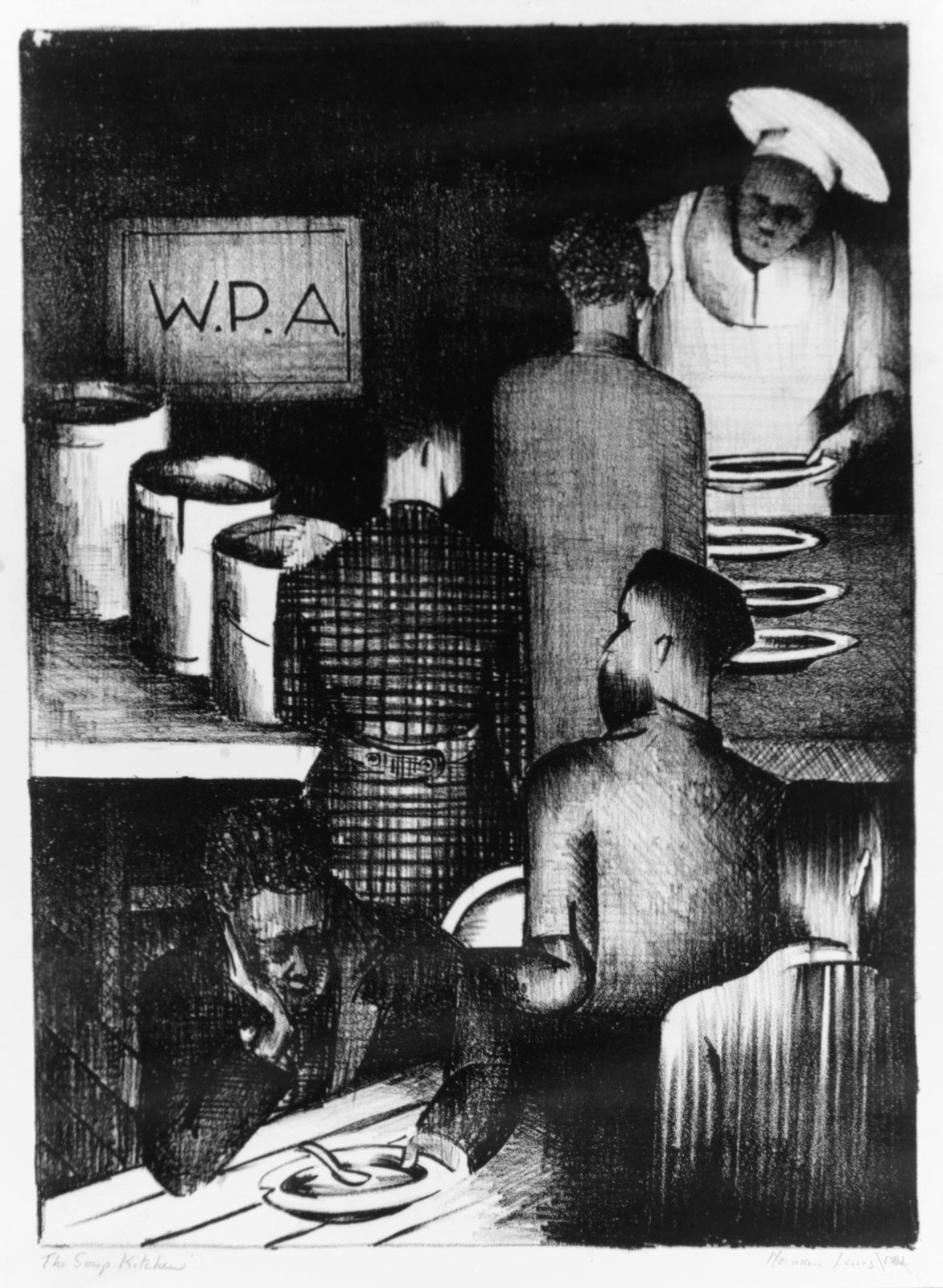
The exhibition also draws heavily from the Great Depression, during which millions of Americans were plunged into poverty, and also the Works Progress Administration, Franklin D. Roosevelt’s New Deal agency that brought people back to work, including artists. “During his second inaugural address in January 1937, President Roosevelt spoke the now-famous words, ‘I see one-third of a nation ill-housed, ill-clad, ill-nourished…The test of our progress is not whether we add more to the abundance of those who have much; it is whether we provide enough for those who have too little.’ A few months later, the Federal Reserve increased its requirements for money in reserve, causing a recession that threatened the economic gains made under the New Deal programs implemented during the president’s first term,” Rudnick writes. “Artists responded to the fluctuating economy and its social effects over the course of the Depression through works that captured the hardships suffered by millions. In direct response to Roosevelt’s address, Louis Guglielmi painted “One Third of a Nation,” a melancholy, lifeless scene of barren tenements. The building at center is adorned with a funereal wreath, and the street before it is littered with coffins.” Guglielmi’s work is part of the exhibition.
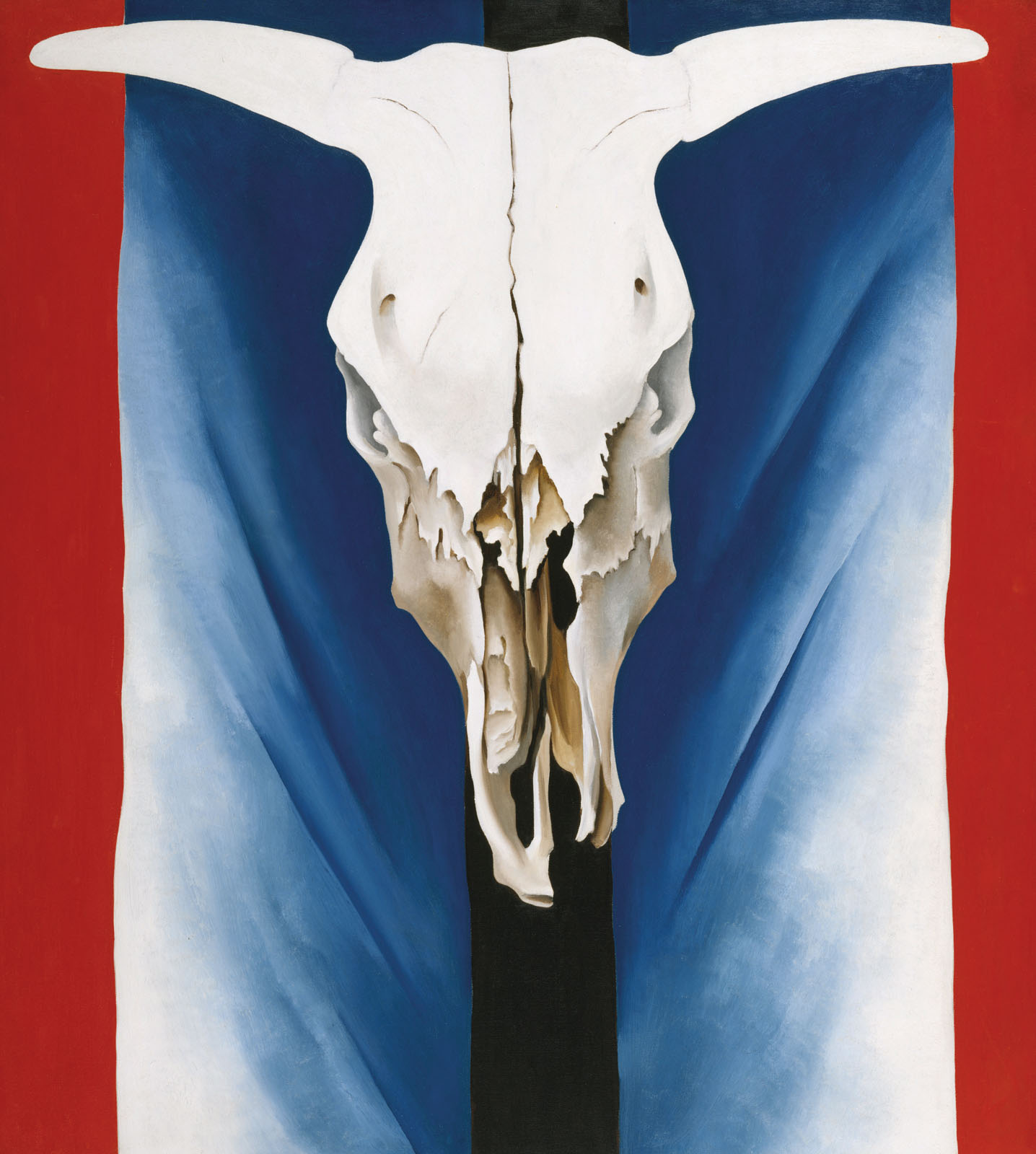 Georgia O’Keeffe (1887-1986), Cow’s Skull: Red, White, and Blue, 1931. Oil on canvas 397⁄8 x 357⁄8 in. The Metropolitan Museum of Art, New York, Alfred Stieglitz Collection, 1952 (52.203). Image © The Metropolitan Museum of Art, New York.
 Art for the Millions: American Culture and Politics in the 1930s remains on view through December 10 in New York.
In addition to more serious topics that were swirling through daily life during the 1930s, the exhibition will also focus on happier times, including the exploration and celebration of the Southwest, represented in part by Georgia O’Keeffe’s Cow’s Skull: Red, White and Blue and imagery from Arizona and New Mexico.
Powered by Froala Editor